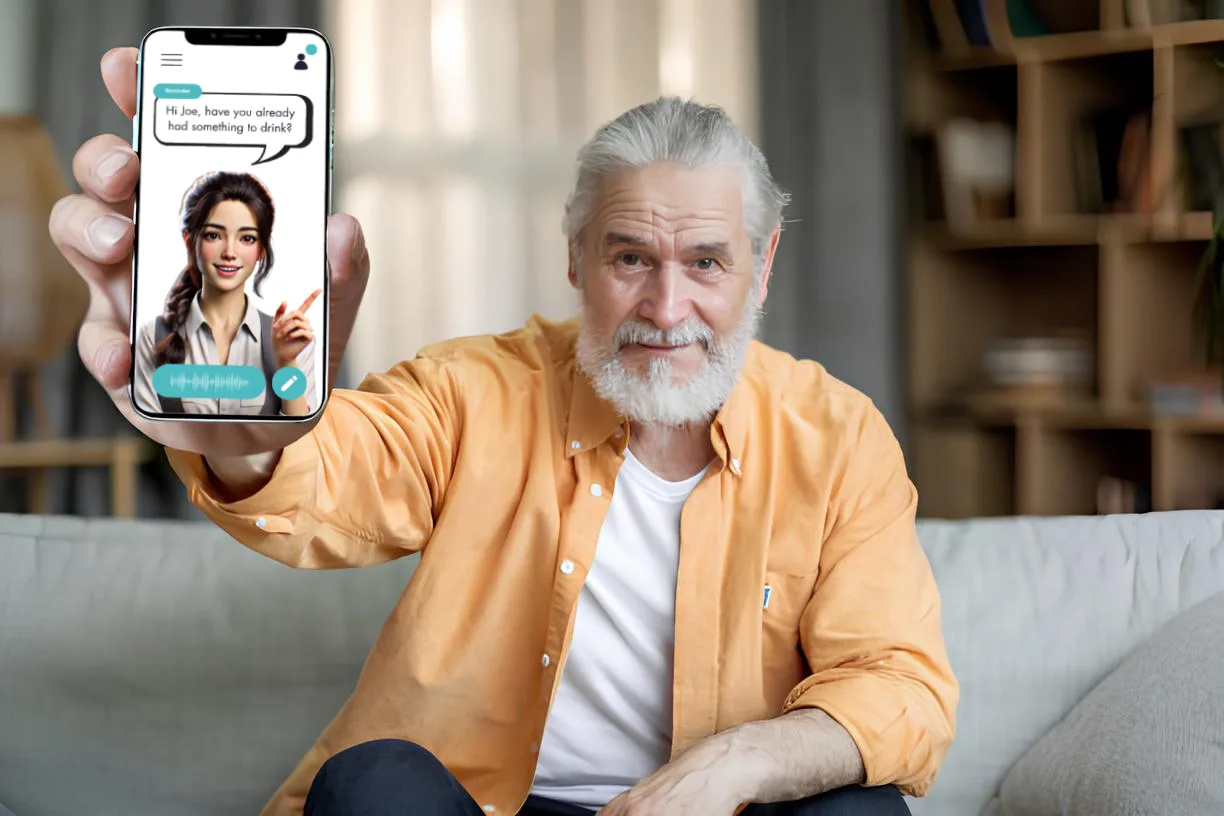

Where AI and elderly care meet
We combine cutting-edge AI expertise with a deep personal mission to tackle one of the greatest challenges in the future of healthcare—ensuring dignity, support, and quality of life for those impacted by dementia.

Transforming dementia care for a growing global crisis
The dilemma
The greatest dilemma in the future of healthcare
We are building a solution to one of healthcare’s greatest challenges, focusing on elderly care for people with dementia.
Today, over 70 million people worldwide suffer from dementia, a number expected to triple by 2050. With the WHO predicting a shortage of 10 million healthcare workers by 2030 and 63 million unpaid carers already providing labor worth $873.5 billion annually, the need for a solution is more urgent than ever.
>0M
Dementia patients
x0
Growing population
0M
Labor shortage
0M
Unpaid carers
One platform, broad impact
Empowering patients, supporting families, and enhancing care – AI-driven assistance for a better quality of life.

Individuals

Families

Caregivers
How to get started
Getting started is simple. In just four steps, patients, families and caregivers are entering a world of unlimited possibilities to improve daily life in and around elderly people with dementia.
Setup and assistant configuration
Every patient is unique, and so is their AI assistant. Families can personalize the avatar, voice, and preferences to ensure comfort, recognition, and tailored support. The assistant adapts to sensitivities, favorite memories, and reminders, making interactions natural while proactively supporting well-being.

Real-time experience and first-level support
The AI assistant engages in real-time conversations, responding naturally and setting automatic reminders. It learns personal habits, preferences, and routines, making interactions more meaningful. Over time, it becomes a reliable companion, offering guidance, emotional support, and proactive assistance tailored to the patient’s needs.

Second-level support
The AI assistant manages daily interactions but alerts caregivers when extra support is needed. Signs of distress, missed medications, or unusual behavior trigger notifications, with the option to escalate critical situations. This smart monitoring eases caregiver stress and ensures timely assistance.

Data analysis and insights
The AI assistant analyzes interactions to track cognitive health, detecting early signs of decline or changes in well-being. Families and caregivers receive reports to adjust care strategies and intervene when needed. This proactive approach enhances quality of life and enables data-driven, personalized support.

Realtime avatar

Integrations

Data security

Availability
Science-backed care for better outcomes
Our AI assistant is developed in collaboration with leading healthcare professionals and researchers to ensure that every interaction follows the best scientific and clinical practices. By providing targeted cognitive stimulation, promoting healthy habits, and reducing loneliness, it aims to slow dementia progression and lower the risk of cognitive decline. The way it handles challenging situations with patience and sensitivity is based on insights from thousands of real patient cases, ensuring a compassionate and effective approach to care.